Last Friday I presented in front of my BNI chapter and did something I’d been ruminating to do since last week. I turned my two favourite things, baking and building websites, into a single presentation. I called it “What Baking Cakes Taught Me About Building Websites,” and I honestly wasn’t sure if anyone would follow the analogy past the first slide.
They did. More than that, a few people came up afterwards to say it actually changed how they think about their own website. One visitor, a fellow web designer, even wrote a lovely recap of it online and said the cake comparison had stuck with her for days. That was probably the best compliment I could have asked for, since she spends her working life doing exactly what I do.
So I wanted to put the main points down properly, partly for anyone who missed the room on the day, and partly because a few people asked if they could send it on to a business partner who needed to hear it. If that’s you, welcome. Grab a cuppa, because we’re doing this properly, cake metaphor and all.
Why I Compared Web Design to Cake Decorating
Here’s the thought that started it all. When I bake a cake, nobody in my family cares about the flour ratio or how long I creamed the butter. They care about the icing. The colours, the shape, whether it’s got their name on it in the right font. Websites work exactly the same way.
Business owners come to me and say “can you make it look modern?” Almost nobody asks “will Google actually understand this website?” or “will this bring me customers?” And yet those two questions matter more than any colour palette ever will. A beautifully decorated cake that’s dry and flavourless inside is still a disappointing cake. A gorgeous website that Google can’t read, and that customers can’t find, is still a website that isn’t working.
That gap, between what people notice and what actually makes something work, was the whole point of the talk.
The Recipe Matters: Why Research Comes Before Design
If I baked a cake without measuring anything, guessing at the flour, guessing at the sugar, it might come out looking fine. It would still be a mess inside. Building a website works the same way. Before a single page gets designed, there’s a list of questions that need answering. Who’s actually searching for this business? What are they typing into Google? What do competitors already rank for, and where are the gaps?
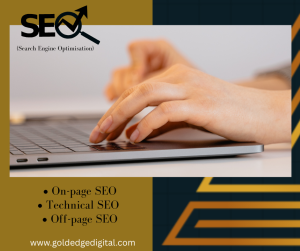
That research is what gives a website its SEO foundation, and it’s also the part nobody sees. Nobody looks at a finished website and thinks “I bet there was solid keyword research behind this.” But it’s the difference between a site that quietly sits on page one and one that never gets found at all. Ranking well isn’t a quick fix either. It’s closer to a marathon than a sprint, which is exactly why I lean on Anne Lochhead, our chapter’s SEO specialist, when a client needs deeper technical SEO work. Good research gets you in the race. It doesn’t guarantee you’ll win it on its own, and that’s a conversation I have honestly with every client before we start.
WordPress vs AI Website Builders: Who Actually Owns the Recipe
This was the part of the talk that got the most laughs, and also the most nodding.
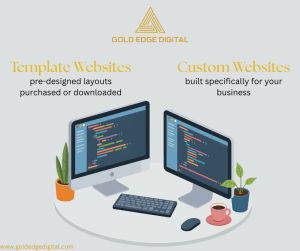
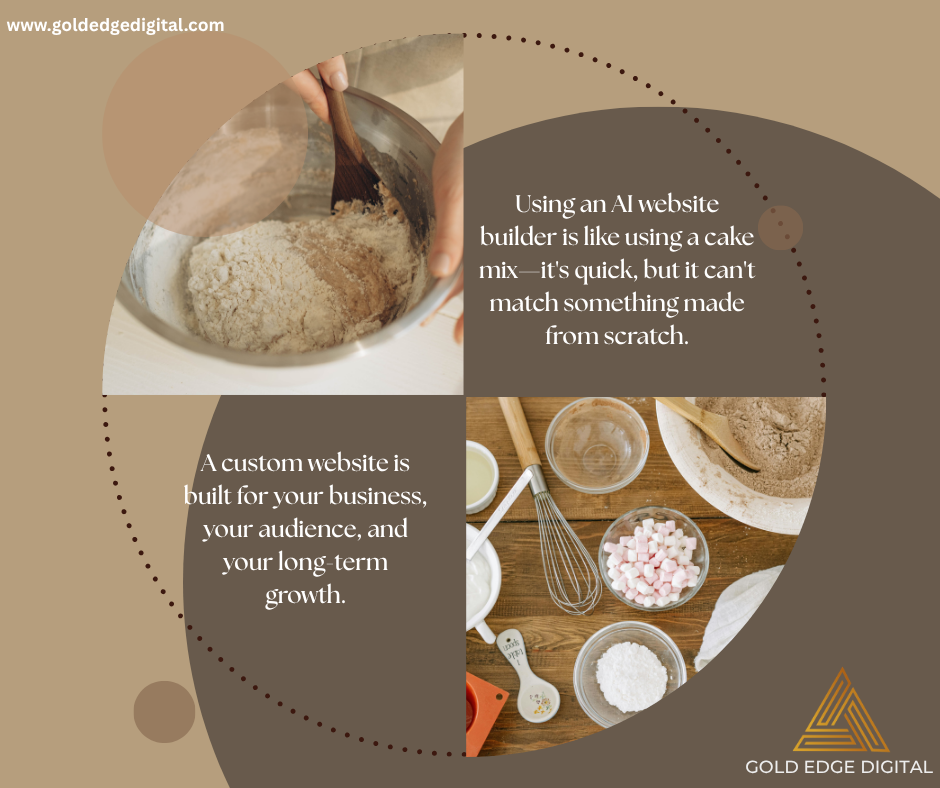
I compare platforms like Wix and Squarespace to a boxed cake mix. Add water, mix, done. There’s nothing wrong with that, until you want something the box can’t give you. WordPress, by comparison, is baking from scratch. It takes a bit more setup, but you end up with full control, a site that can grow with the business instead of boxing it in, and something another developer can actually pick up and work on later if you ever need them to. You own the recipe, not just the finished cake.
Then there are the AI website builders, and this is where I had a bit of fun. Watching one of those tools spin up a site in five minutes reminds me of a cooking show where someone says “just throw it all together” and a perfect three-tier cake appears out of nowhere. It looks impressive. But that tool doesn’t know your customers, your competitors, or your local market, and it definitely doesn’t know what Google needs to see to rank a page. AI tools are genuinely great assistants. They’re not strategists, and they’re not a replacement for someone who understands your industry and your goals.
The Ingredient AI Can’t Replicate
I closed the cake analogy with the ingredient that matters most and gets talked about least: judgement. My experience, my taste, the hundreds of small decisions I make on every project, are what turn a template into something that’s actually yours. The same is true for any business owner. Your experience in your industry, the things only you know about your customers, are not something a tool can generate for you. Design is the icing. It goes on last, once the structure underneath can actually hold weight. Everything else really is icing, once the foundation is right.
Real Websites, Real Local Businesses
I shared three client stories in the room, because talking in the abstract only gets you so far. One was Myles Medwell, an allied health professional who came to me through a BNI referral just as he was starting his own practice. He didn’t need convincing that a website mattered, he needed someone to build the right one from day one, with proper service pages and a clear path for someone to actually get in touch. More than a year on, that site is still bringing in genuine enquiries through the contact form every single week, not spam, actual potential clients booking in.
Another was Ron Rapetti of Movies on the Move, a business that’s been around for a while but recently changed hands and rebranded. His old site was two pages, which meant Google had almost nothing to work with when someone searched for one of his specific services. We’ve rebuilt it into a dozen properly structured pages, one for each service, so each one has a real chance of being found on its own. The SEO work is still ongoing there, which is exactly the point I made in the room: this isn’t a five-minute job, it’s an investment that keeps paying off as it matures.
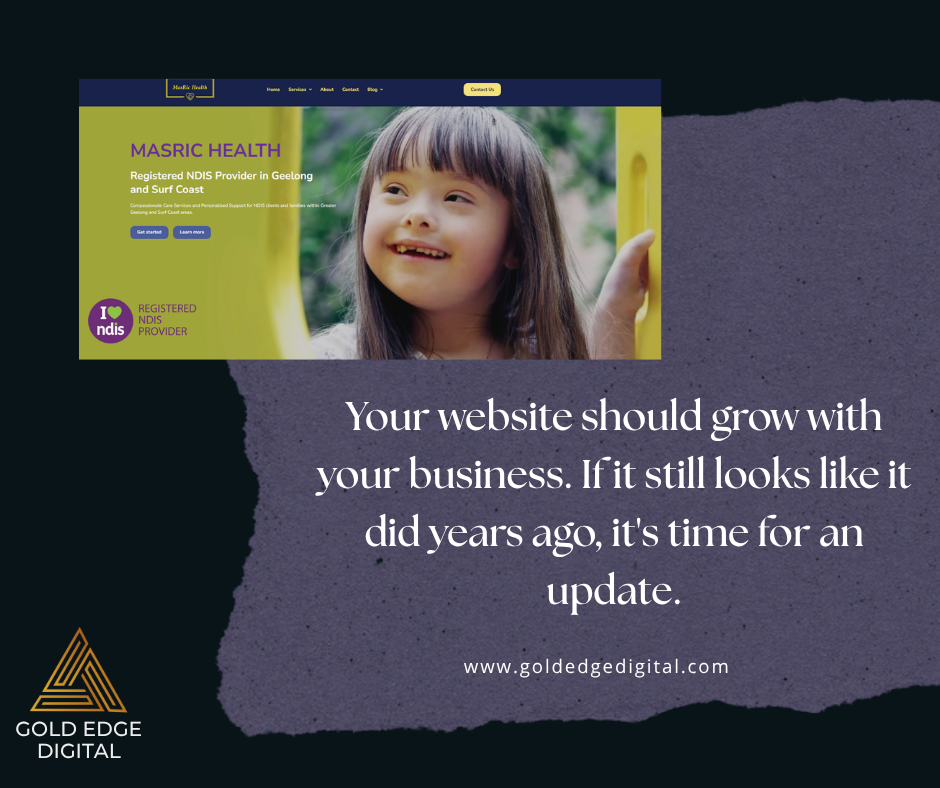
I also touched on an NDIS provider I’ve worked with, though I’ve written about that one in more detail in a previous post if you want the full story of how a good-looking GoDaddy site was quietly invisible to Google until we rebuilt it properly. You can read that one here.
What a Strategy Call With Me Actually Looks Like
A few people asked me afterwards what actually happens before I touch a single design element, so it’s worth spelling out. When a new client comes to me, the first conversation isn’t about colours or logos at all. It’s about their customers. Who are they, where do they search, what do they type into Google when they’re looking for exactly what this business offers?
From there, I look at what’s already ranking. Not to copy it, but to understand what Google currently thinks a good answer looks like for that search, and where the gaps are that a new site could actually fill. Only after that do we talk about site structure, how many pages, what each one needs to say, and how they link together so both Google and a real visitor can find their way around easily.
Design comes last, deliberately. It’s the same order I follow with a cake. Decide what you’re making and who it’s for, get the structure right so it can actually hold together, and only then start thinking about how it should look. Business owners are sometimes surprised that a web designer wants to talk about their customers before their colour scheme, but it’s the only order that actually produces a website that works instead of one that just looks nice for a week.
What This Means If You’re Weighing Up a New Website
If you’re a small business owner in Moreton Bay or Brisbane trying to decide between a DIY builder, an AI tool, and something custom, here’s the honest version. If your website only needs to exist, a boxed mix might genuinely be enough. But if you need it to bring in customers, rank on Google, and grow as your business does, you need the research and the structure first, and a platform that won’t box you in later.
That’s the conversation I have with every client before we talk about colours or fonts, and it’s exactly why this presentation resonated the way it did. People don’t remember the icing. They remember whether the cake actually worked.
If your website has been sitting there looking fine but bringing in nothing, or if you’re not sure whether WordPress, a builder, or an AI tool is the right call for your business, book a free discovery call and we’ll figure out what your business actually needs, not just what looks good.
Is your website missing some key ingredients? Contact me today for a free site audit. Visit goldedgedigital.com or call 0497 616 395.